Most people don’t think about the place they’d go in an emergency. In stressful situations, confusion can rapidly spread, particularly in large buildings, office complexes, warehouses, apartments, and public areas where lots of people aren’t familiar with the layout. An organized emergency plan can help reduce this confusion.
Well-designed evacuation and intervention plans offer immediate, visual guidance which helps the occupants, employees as well as security and firefighters act more quickly when every second counts. These plans do not consist of a document that is wall-mounted. They are practical safety tools designed to aid in emergency situations.
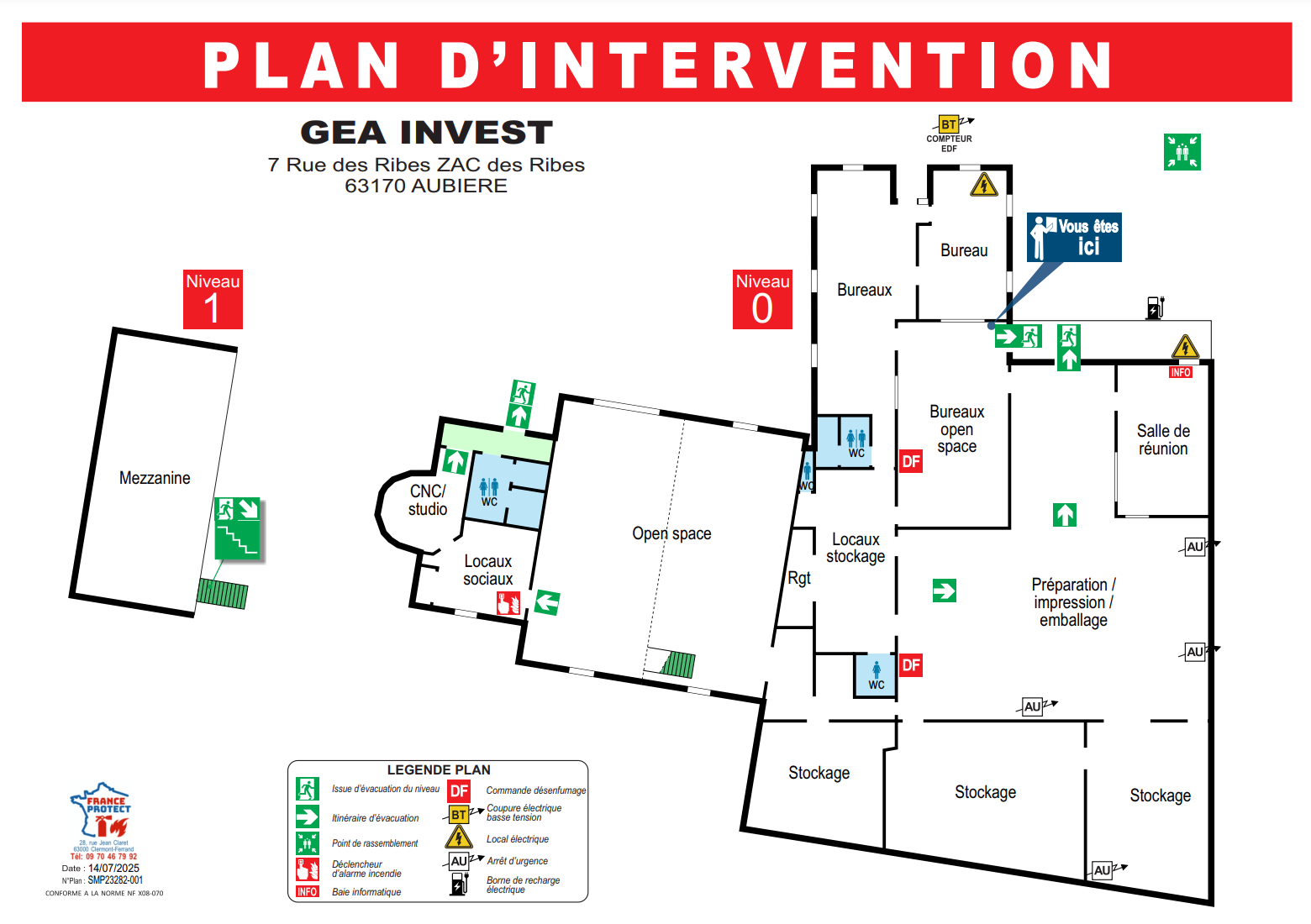
Public and private establishments across France are increasingly aware of the necessity to ensure that emergency documents are up-to-date clear, easy-to-read, positioned and adapted to each structure.
Plans for evacuations and emergency intervention plans serve many functions
A lot of people believe that all fire safety plans perform the same purpose, however evacuation plans and intervention plans are created for distinct groups of people.
A plan to evacuate Lyon structures is mostly designed for employees, visitors clients, contractors and other occupants within the premises. This plan is intended to assist those in safe and swiftly leaving the building in an emergency.
The plans typically include information about exits and stairways. Additionally, they might include alarm systems emergency equipment or evacuation routes. The place of the information is also crucial, as occupants must be able find it immediately in stressful situations.
The Clermont Ferrand intervention plan however, is tailored for the specific needs of firefighters, security personnel and emergency response personnel. It provides more detailed information concerning emergency access, utility shutoffs circulation zones, safe systems, technical rooms, and sensitive areas inside the building. Both types of plans work together to ensure safer emergency response procedures.
It’s more important than most people realize that positioning and visibility are key factors.
The fire safety plan can only be useful if the people are able see it and understand it. Plans hidden behind doors, or placed too high, hard to read, outdated or poorly lit are often ineffective and lose a lot of their use in emergency situations. Content and layout are crucial in planning to ensure fire safety.
Most often evacuation plans are installed in areas where residents spend the most time, for example at the entrances or in lobbies. Emergency response teams often place plans for intervention near points of entry to the technical areas of the fire department or security stations. They are able to quickly access vital building information upon arrival. Plans that have been professionally designed increase visibility, readability and emergency coordination across the entire property. To know more, click here plan d’intervention incendie Lyon
The updated regulations are altering expectations regarding fire security.
In France Fire safety regulations in France continue to evolve for public buildings. In spite of their layout, Category 5 ERP buildings were required to have proper documentation required for evacuation and emergency intervention. In order to ensure compliance with current requirements, organizations property managers, trustees and businesses and public facility managers require more professional guidance.
Clermont property owners who wish to ensure their homes are secure and in compliance, and be prepared for changes to the regulations in the near future, must prepare an intervention and evacuation plan. In addition, keeping up-to date documentation shows professionalism and accountability to occupants, inspectors, and emergency services too.
The accuracy of building information is crucial for emergency responders.
Firefighters often have to enter buildings that are not identified under extremely challenging conditions such as heat, smoke low visibility, and high pressure. Emergency teams can gain a better understanding of the structure using precise plan of action.
A well-planned fire intervention strategy for Lyon properties could include emergency access points, shutoff of utilities areas, compartmentalization zones technical rooms and smoke extraction systems and fire protection tools available inside the structure.
Having this information available helps emergency responders make quicker operational decisions, and also improving the efficiency of the intervention. For properties or buildings with more complex structures, organized and up-to-date intervention documentation can help improve emergency coordination.
Regular Updates Keep Plans Relevant
Buildings change over time. The office environment can change. like changes to walls, renovations or relocations of technical equipment, and changes to circulation routes, can take place. Plans for fire safety that aren’t updated following these changes could quickly become ineffective. In an emergency situation, an outdated evacuation plan, or an absence of technical details can lead to confusion.
Regular reviews ensure that emergency plans are aligned with the current construction layout and safety protocols. Many organizations view periodic updates more as part of their continuous risk management than as a simple administrative job. Professional providers assist businesses in keeping track of these updates while making sure they are in compliance with the most current standards and best practices.
Clear fire safety planning leads to safer environments
It is crucial to keep in mind that prevention of fire doesn’t end with extinguishers and alarms. When security is effectively planned, people learn how to respond calmly and efficiently in the event of emergencies occur.
If emergency procedures are clearly identified and well-organized employees feel more secure. Visitors are benefited by clearly-marked evacuation routes. Emergency responders have faster access to vital information about buildings. The fire safety plan is an expert service that is beneficial to everyone. France Protect Securite Incendie provides services that help businesses, industries, and people living in Auvergne Rhone Alpes make safer spaces.
The importance of preparation during emergencies
The likelihood of emergencies not being forewarned is very low. The quality of preparation often determines how a structure reacts when a crisis occurs.
A planned evacuation plan for Lyon buildings, a precise creation of an intervention and evacuation plan to Clermont services, as well as a professionally developed Fire intervention plans for Lyon properties all contribute to better emergency management.
Clear, well-placed and regularly updated plans lessen confusion, enhance emergency coordination, and aid in safe evacuations for the occupants and emergency personnel too.
For public and private establishments making sure that they have a clear emergency plan is more than just meeting the requirements. Every day, it is about creating safer spaces that protect people, and improving preparedness.